Continue with Google


Plan Your Dream Trip
Handcrafted itineraries by travel experts
Book Your Trip
Share your details and our travel expert will reach out shortly.
Best time to visit information will be available soon.
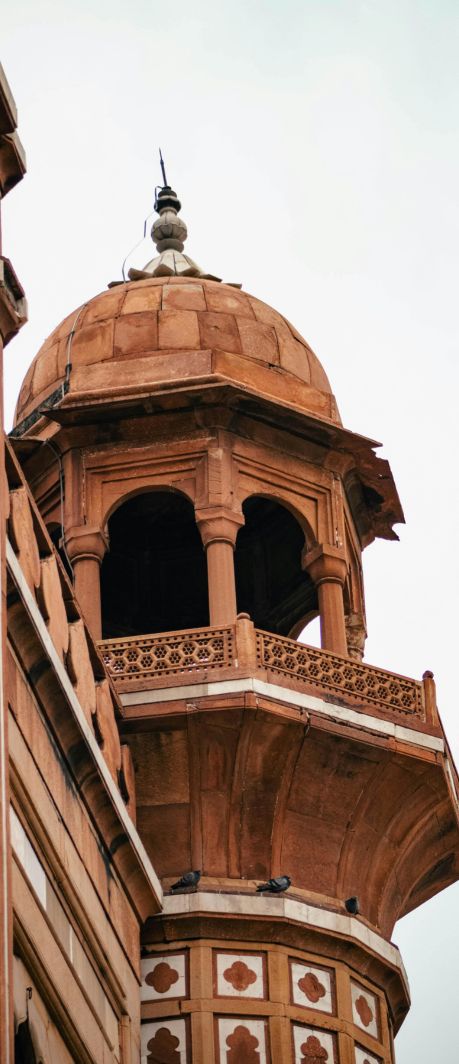
Humayun’s Tomb, located in Delhi, is a magnificent example of Mughal architecture and a UNESCO World Heritage Site. Built in the mid-16th century, this grand mausoleum was the first garden-tomb in the Indian subcontinent, blending Persian elegance with Indian craftsmanship. Often seen as the architectural forerunner to the Taj Mahal, Humayun’s Tomb is not only a resting place of a Mughal emperor but also a timeless symbol of love, legacy, and imperial artistry.
Commissioned in 1565 by Empress Bega Begum, the widow of Emperor Humayun, the tomb was designed by Persian architect Mirak Mirza Ghiyas. It marked a significant departure from earlier tombs with its charbagh-style layout—a four-part Persian garden divided by water channels and pathways, representing paradise as described in Islamic texts.
The mausoleum is constructed from red sandstone with white and black marble inlays, rising majestically on a 7-meter high platform. Its double dome, soaring arches, and symmetrical layout reflect the grandeur and precision of early Mughal architecture.
Humayun’s Tomb is more than just a single monument—it is part of a larger funerary complex that houses over 150 Mughal family members, making it one of the largest dynastic tombs in India.
Significant structures within the complex include:
Isa Khan’s Tomb – a beautiful pre-Mughal tomb with distinct octagonal architecture.
Barber’s Tomb (Nai-ka-Gumbad) – a lesser-known gem within the gardens.
Arab Sarai – believed to be built for the craftsmen who worked on the tomb.
Afsarwala Mosque and Tomb – adding to the spiritual atmosphere of the site.
These surrounding monuments offer a deeper glimpse into the early Mughal era and its architectural experimentation.
The charbagh garden—a Persian-style quadrilateral layout with flowing water channels, fountains, and shaded walkways—offers a peaceful and reflective environment for visitors. The symmetry of the garden and the layout of the tomb enhance its sense of balance and tranquility.
It’s an ideal place for photographers, historians, and architecture enthusiasts, especially during the golden hours of sunrise and sunset, when the monument glows in warm light.
The site has been beautifully restored and maintained, with the Aga Khan Trust for Culture playing a major role in conservation efforts, making it one of the most well-preserved heritage sites in Delhi.
Humayun’s Tomb is often regarded as the inspiration for the Taj Mahal, not just in design but in the emotion that led to its creation. It represents a wife’s devotion, a dynasty’s pride, and an era’s artistic vision.
For anyone visiting Delhi, Humayun’s Tomb is a must-see—a perfect blend of history, architecture, and serenity, nestled in the heart of the bustling capital.
Explore our latest blog for fresh insights, expert tips, and trending ideas to inspire your journey!